Influence Maps
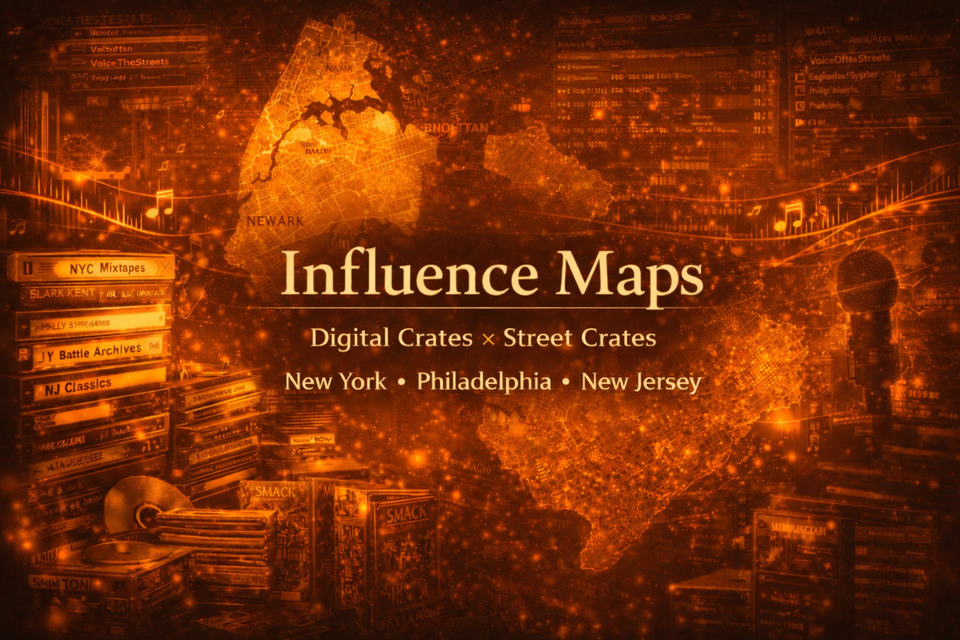
Cultural Cartography of The Frequency District
The Districts tell my story.
The Archive preserves the eras.
The Influence Maps document the structure.
This section exists to trace the cultural architecture that shaped my listening ear, curation instinct, and identity.
These are not artist lists.
They are ecosystem studies.
Each Influence Map examines:
- Regional energy
- Format infrastructure
- Movement evolution
- Cultural acceleration
- Structural roles
Hip-hop did not evolve randomly.
It moved through tension, migration, rivalry, innovation, and infrastructure shifts.
This is where that evolution is mapped.
What Is an Influence Map?
An Influence Map is a structural breakdown of a cultural movement.
Instead of ranking artists or albums, these maps examine:
- Where movements started
- How regional scenes interacted
- How formats (vinyl, mixtapes, DVDs, forums) accelerated change
- Which artists played foundational vs. catalytic roles
- How sound shifted through rivalry, geography, and technology
These maps preserve lineage — not hype.
They are documentation tools.
Movement Maps
Old School Foundations
Bronx origins. DJ architecture. Cultural foundation.
→ /old-school/
East Coast Movement
NYC, Philly, Jersey, DMV, Toronto, Upstate NY.
The core ecosystem.
→ /east-coast/
West Coast Movement
Los Angeles, Bay Area, Southern California.
Mixtape adaptation and coastal rivalry.
→ /west-coast/
Down South Movement
Atlanta, Houston, Memphis.
Trap evolution and mixtape empire.
→ /down-south/
Chicago & Trap Movement
Drill compression and Midwest reinterpretation.
→ /chicago-trap/
How to Read These Maps
Each map follows a consistent framework:
- Reflective context
- Structural role definition
- Format layer
- Ecosystem summary
- Preservation anchor
This consistency is intentional.
The goal is not nostalgia.
The goal is structural preservation.
Why This Matters
Music culture is often flattened into playlists and trends.
Influence Maps exist to preserve movement structure — the architecture beneath the sound.
Before streaming algorithms, there were regional ecosystems.
Before metadata, there were format standards.
Before global reach, there were local accelerators.
These maps preserve that infrastructure.